
Global Territories Of Craft And Innovation
TERRITORIES OF KNOW-HOW
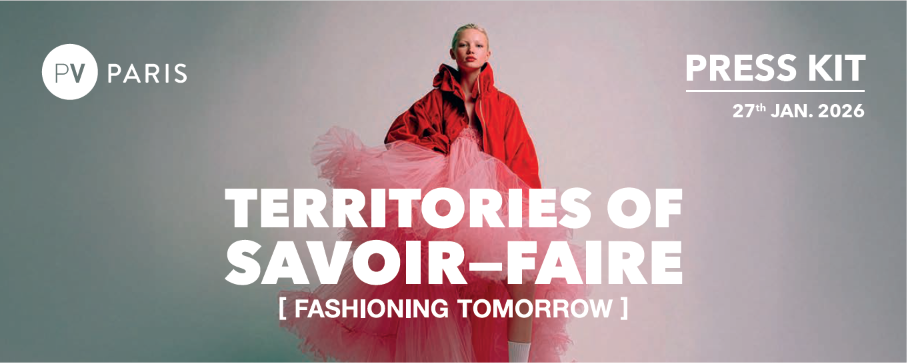
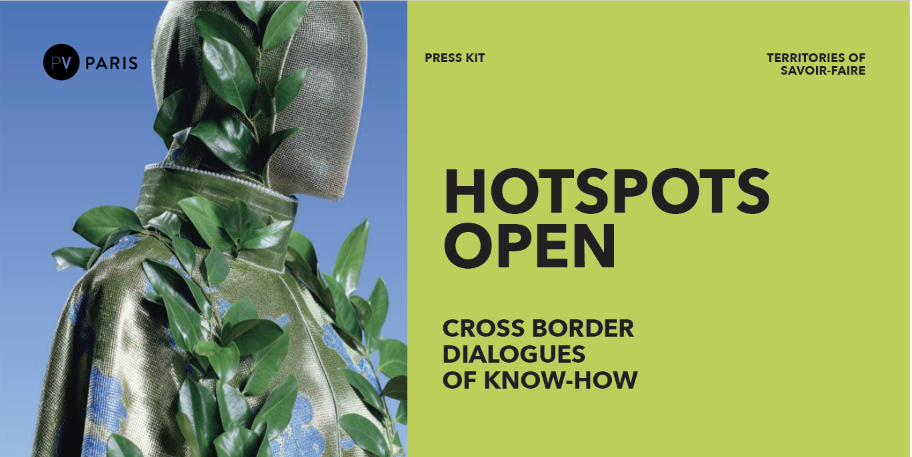
In a world where commercial and cultural geographies are being redefined, global trade is being disrupted, and traditional scales must be reconsidered, Première Vision continues its strategic commitment to supporting craftsmanship and chooses to shine a light on territories from 3-5 February 2026 at Paris Nord Villepinte.
Territories are rich in know-how, and some have succeeded in documenting, preserving, and revitalizing it, bringing together memory and momentum, heritage and innovation. Territories are also a source of foresight.
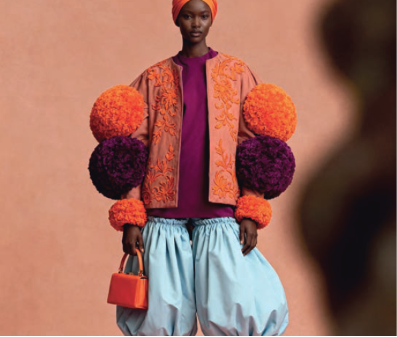
The exhibition is conceived as a journey through the many identities of savoir-faire and their geographies, exploring their capacity for dialogue and offering a focused exploration of Japan, Portugal, and France, to inspire new ways of doing, seeing, creating, and thinking. It serves as a fertile ground for diverse and enriching experiences, shaped by key players who push boundaries and view savoir-faire as a wealth of human, social, artisanal, cultural, and heritage resources. From the local to the farthest reaches, from upstream to downstream, from raw materials to creators. A commitment to developing local models as models for the future: rediscovering what already exists, nurturing local skills, championing diversity, reconnecting with nature, and highlighting the breadth of textile culture and existing innovation. For the February 2026 edition, we will explore the world’s wealth of savoir-faire. We will discover these three countries through exhibitors presented along a dedicated route, as well as through conferences, keynote speeches, and cross-border dialogues on savoir-faire in the Prospective Area, inviting us to envision a future shaped by bold choices. An exploration of textile territories, their current identities, the people who bring them to life and guide them toward the future, and the power of TERRITORIES OF SAVOIR-FAIRE!
FRANCE CULTURE(S) & CONTRE-CULTURE PRESS KIT
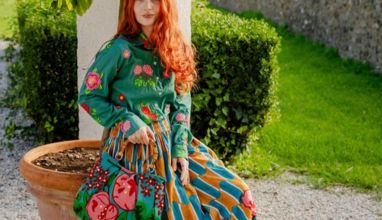
France, a land steeped in fashion history, inspires and nurtures workshops, creativity, artists, artisans, and manufacturers. It is also home to vibrant and prolific fashion museums, schools, and students from around the world, a truly thriving ecosystem! A fashion phenomenon, a world capital, where couture houses and workshops are just steps away. A city that extends its boundaries to nurture the next generation of artisans and designers. A city that embraces all forms of creativity, with a deep curiosity for others. A city where every style and culture parades by, constantly fueling its eye for new ideas. Hybridized skills, born of cultural exchange and inspiration, drawing on both high tradition and subversion. Centuries-old techniques, such as Leavers lace and embroidery in Calais and Caudry; fragments of living history, are being challenged by a new generation of artisans and creators who dare to blend CULTURAL AND COUNTERCULTURAL ELEMENTS. It is a creative diversity supported by territorial catalysts, such as the Mediterranean fashion house, and by incubators like the brand-new Tremplin Mode et Textile.
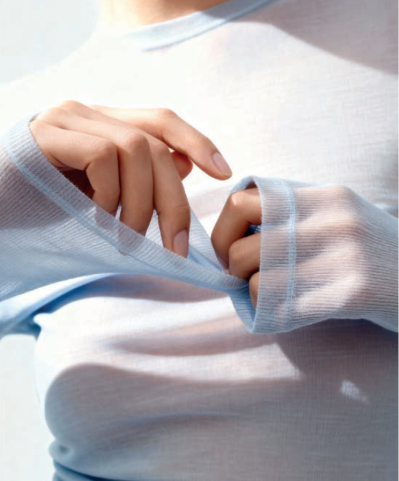
Territories reinventing themselves in the wake of deindustrialization, driven by resilient and passionate industrialists and entrepreneurs offering a new local approach. With the ambition to champion textile culture, create momentum, and connect with people. An entrepreneurial spirit propelling the ecological transition and using it to reinvent heritage, organizations, and professions. Businesses proud to be part of Living Heritage. A territory of constantly evolving savoir-faire, whose dynamism comes from blending cultural heritage with openness.
Their passion will be on full display in the conferences: Jeanne Friot - Créatrice, Vorlette Fakhri du Tremplin; Ariane Vitou, innovation consultant for regional development; Camille Berger Sfate & Combier-Guigou; Burç Akyol, designer; Jina Luciani, President of the Mediterranean Fashion House; Olivier Verriele, Choletbased Manufacturing Company; Baptiste Pages, Atelier Feonie; and many others ! A partnership with Le Monde, the leading national daily newspaper, focused on designing a conference series on French craftsmanship, led by Elvire von Bardeleben, Head of the Fashion section..
Not to be missed: LINEN EXPERIENCE. The European Flax and Hemp Alliance invites you on a journey into the heart of French and European flax, its production regions, farming practices, and environmental performance. From plant to finished product: cultivation, retting, scutching, spinning, weaving or knitting. Production territories, agricultural practices, and environmental performance.
Exhibitors energizing French regions: in the UIT area, identified through a dedicated route available on the Première Vision Paris website. And for a stroll through Calais–Caudry: lace makers Solstiss, Sophie Hallette, Beauvillain-Davoine, and Jean Bracq; and on the embroidery side, Maison Lévêque and Albert Guégain & Fils.
The fabulous master artisans Maisons d’Exception: Anne Lopez, Antonin Mongin, Atelier Aurélia Leblanc, Atelier Sofia Shazak, Atelier Sumbiosis, Audrey B. Studio, Céline Breton, Cécile Feilchenfeldt, Cécile Gray, Karl Mazlo, the Carnoy workshops, Marie Archambaud, and Marta Mantovani.
PORTUGAL KNOW-HOW, LIVING SUSTAIN!
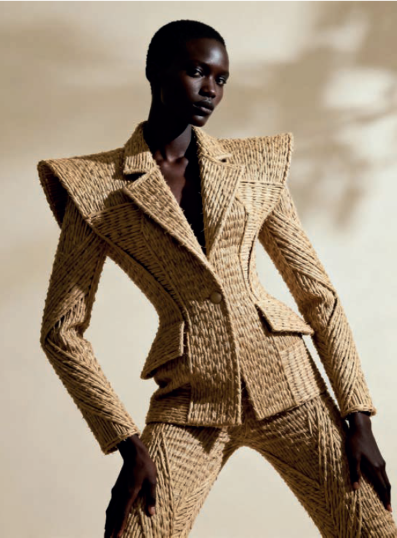
Portugal stands out for its strong commitment to sustainability. It acts, researches, innovates, and preserves, while actively supporting the transition toward more responsible fashion systems.
The country has developed a robust ecosystem where sustainability is central: entrepreneurs, workers, universities, and technology centers collectively nurture a dynamic environment for ethical fashion. This ecosystem combines a rich diversity of craftsmanship with a highly advanced industrial base.
In the northern textile clusters—particularly in the Ave and Cávado valleys—production is highly organized, enabling full control of the value chain from yarn to fabric to finished garment. This structure ensures a strong level of vertical integration and efficiency.
Sustainable practices are widely implemented, including reduced water consumption, improved energy efficiency, the use of lower-impact raw materials, short supply chains, closed-loop dyeing systems, and circular production models.
Portugal is also developing innovative 100% plant-based fibers derived from local resources such as eucalyptus, coffee waste, and tree bark. In parallel, next-generation materials—based on regenerative agriculture, bio-based inputs, or biofabrication—are contributing to more sustainable material and energy solutions.
The region hosts numerous manufacturers fully engaged in sustainable performance, having invested heavily in new technologies, machinery, logistics, and short-run production capabilities. Innovations such as Digital Product Passports, QR codes enabling real-time environmental impact tracking, and AI-assisted defect detection systems reflect a deep structural transformation toward sustainability.
As key drivers of the industry’s evolution, these manufacturers actively support European sustainable designers and contribute to shaping the future of responsible fashion.
Portugal represents a reservoir of unified resources, addressing today’s and tomorrow’s major challenges. It is a territory of vibrant, committed, and forward-looking know-how: LIVING SUSTAIN!
Don’t miss:
CITEVE, a nationally and internationally recognized private non-profit technological center founded in 1989 in Vila Nova de Famalicão (Northern Portugal), acts as a platform for innovation, research, and technological support for companies in the textile and apparel sector, particularly SMEs.
To see:
At the trade show, CITEVE presents experimental silhouettes developed within the Be@t project, showcasing the latest advances in applied research, sustainability, and digital transformation. These pieces, equipped with a Digital Product Passport ensuring transparency and traceability, result from close collaboration between around twenty companies covering the entire textile and apparel value chain.
The Be@t project (Bioeconomy at Textiles) is a strategic initiative led by CITEVE aimed at transforming Portugal’s textile and apparel industry toward a more sustainable, circular, and bio-based economy.
CITEVE news:
A partnership with Agromethod Labs on hydroponic cotton cultivation.
Exhibitors energizing the Portuguese territory:
Identified through a dedicated route available on the Première Vision Paris website.
Hits: 1663 | Leave a comment
About the Author

Laura Palazzi
Laura holds a two-year technical degree in Marketing, Communication, and Logistics from St. Louis – Ste. Marie School in Gignac-la-Nerthe, France. Passionate about fashion, she enjoys writing about the latest fashion trends, branding, and marketing strategies.



 (4)m.jpg)